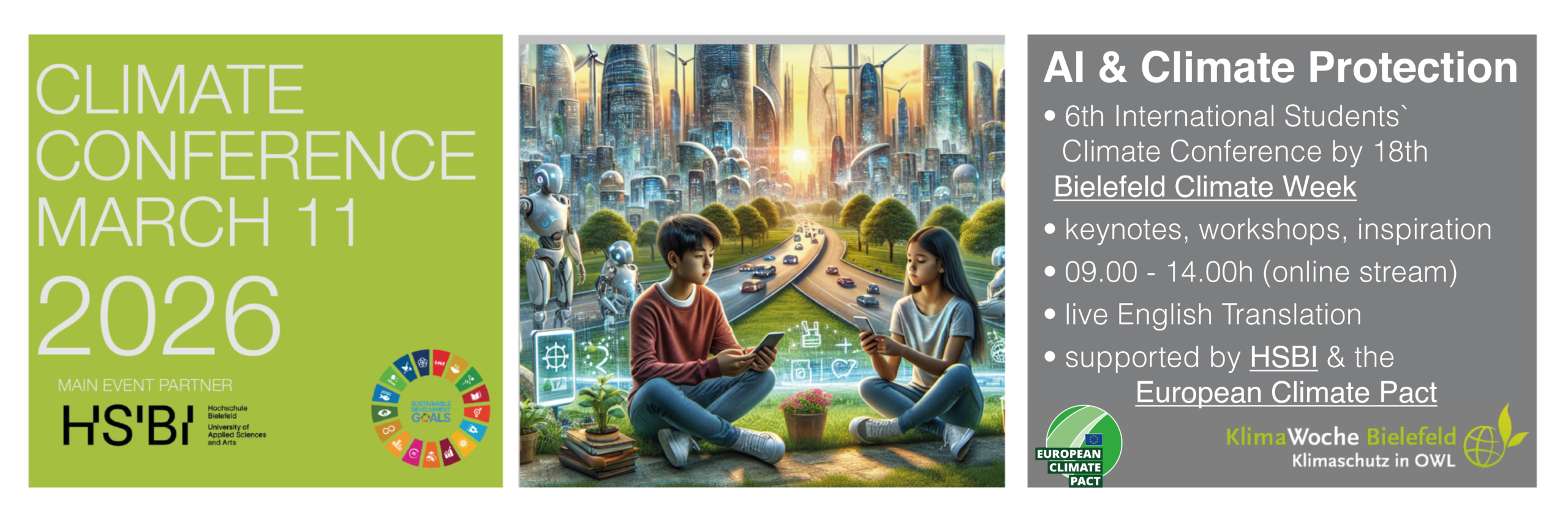
6th International Student Climate Conference

Wednesday, 11 March 2026 | 09:00–14:00 CET | HSBI Bielefeld – University of Applied Sciences and Arts

Interaktion 1 | 33619 Bielefeld | Germany
www.hsbi.de

AI & Climate Protection

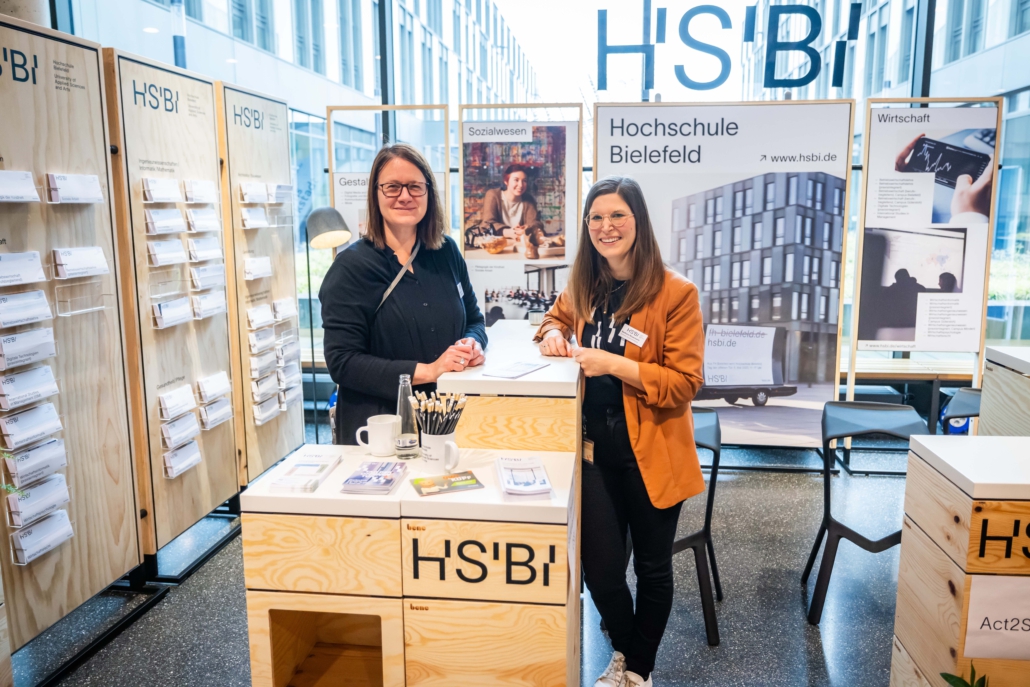
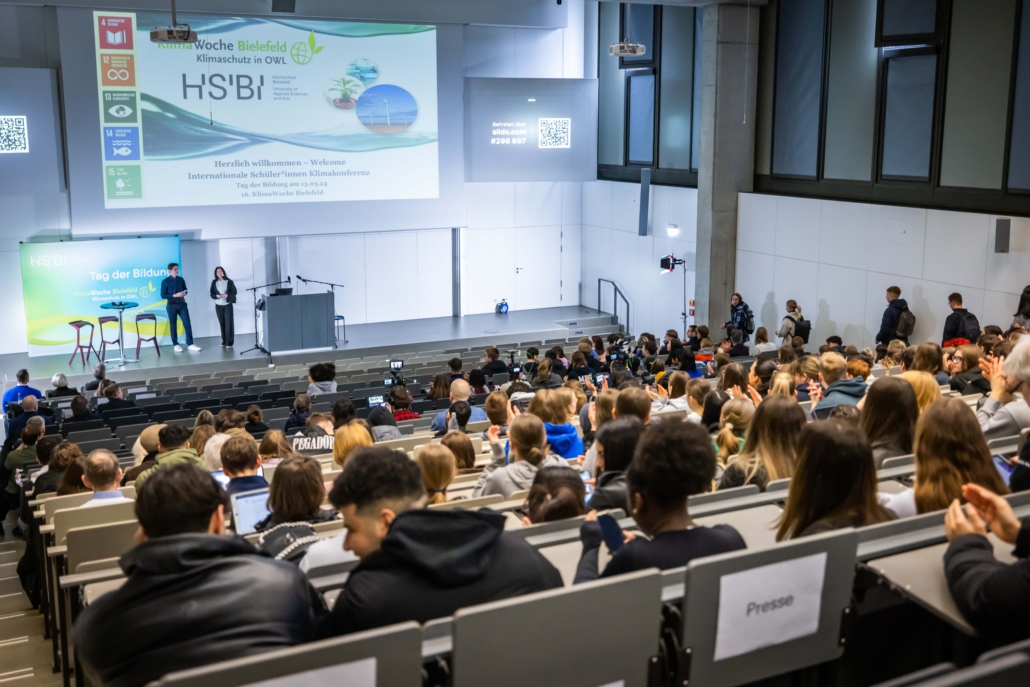
On 11 March 2026, the Hochschule Bielefeld – University of Applied Sciences and Arts (HSBI) will host the 6th International Student Climate Conference. Under the main theme “AI & Climate Protection”, schools and students from grades 7–13 (including upper secondary level) as well as vocational colleges are invited to explore one of the most influential technologies of our time: Artificial Intelligence.

AI has already become part of our everyday lives – in schools, on social media, in games, in research and in business. It can support learning, help save energy, improve climate modelling and enable new solutions for environmental and resource protection. At the same time, it raises important questions: How is AI changing everyday school life? How can we use it responsibly and thoughtfully? What is the energy demand of digital technologies? Where are the risks – such as cyberbullying, manipulation or cybercrime? And how critically should we evaluate the use of AI?

The Student Climate Conference 2026 makes these topics tangible. It combines the opportunities of AI for climate protection with a conscious and reflective approach to the digital world.

The aim of the event is to raise awareness among students about the ecological, social and societal impacts of digital technologies – while at the same time encouraging them to actively, creatively and responsibly shape the future of AI. Through keynotes, workshops and interactive formats, participants will gain knowledge, explore different perspectives and discover concrete opportunities for action.

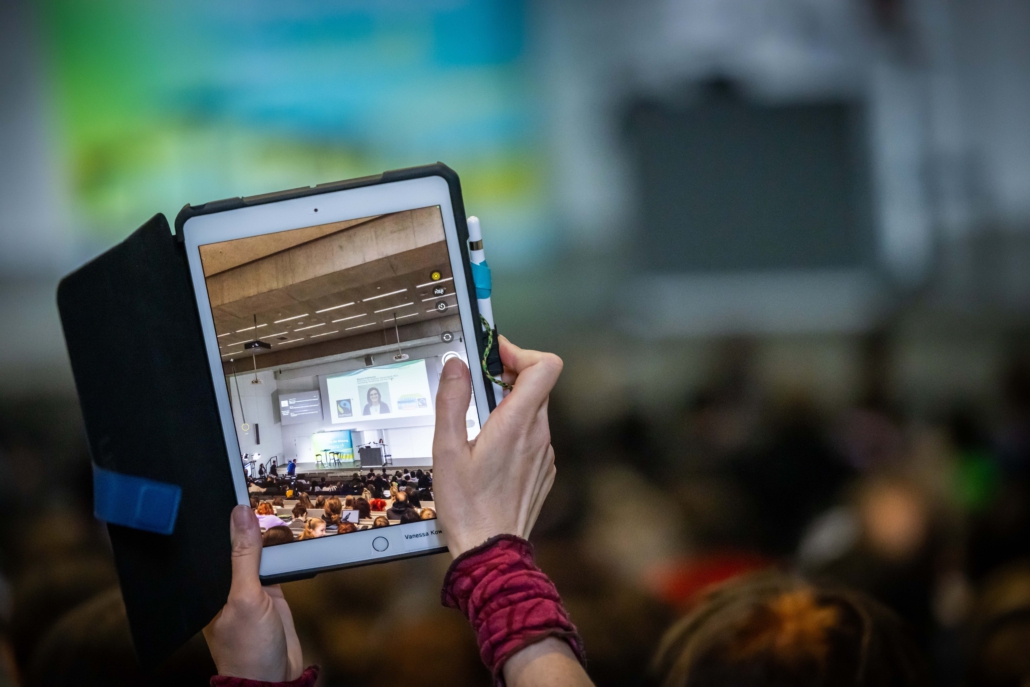
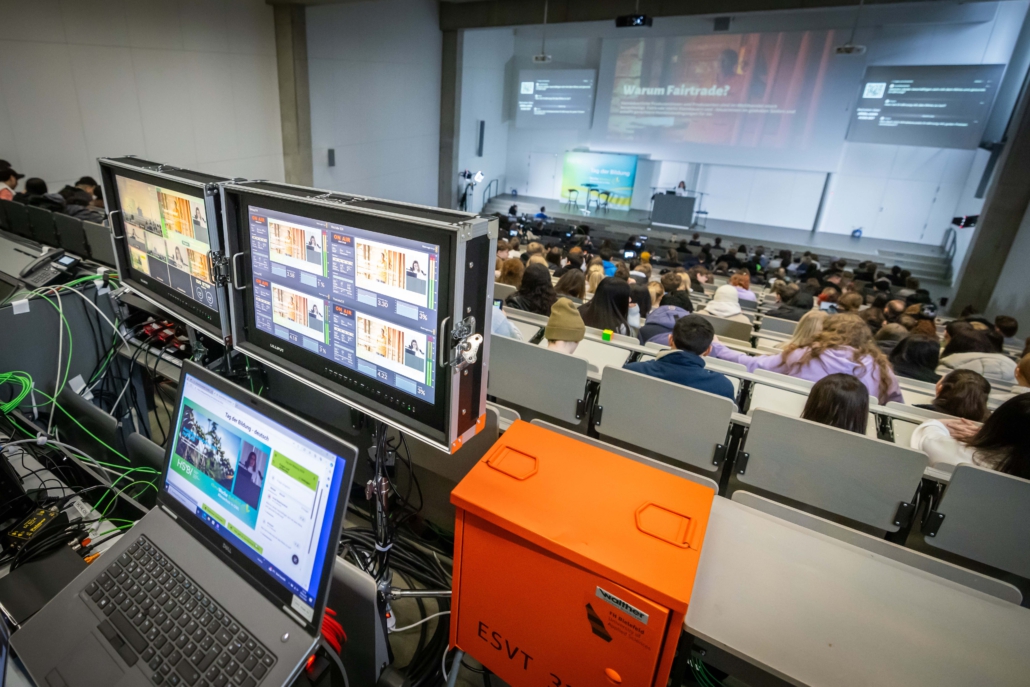
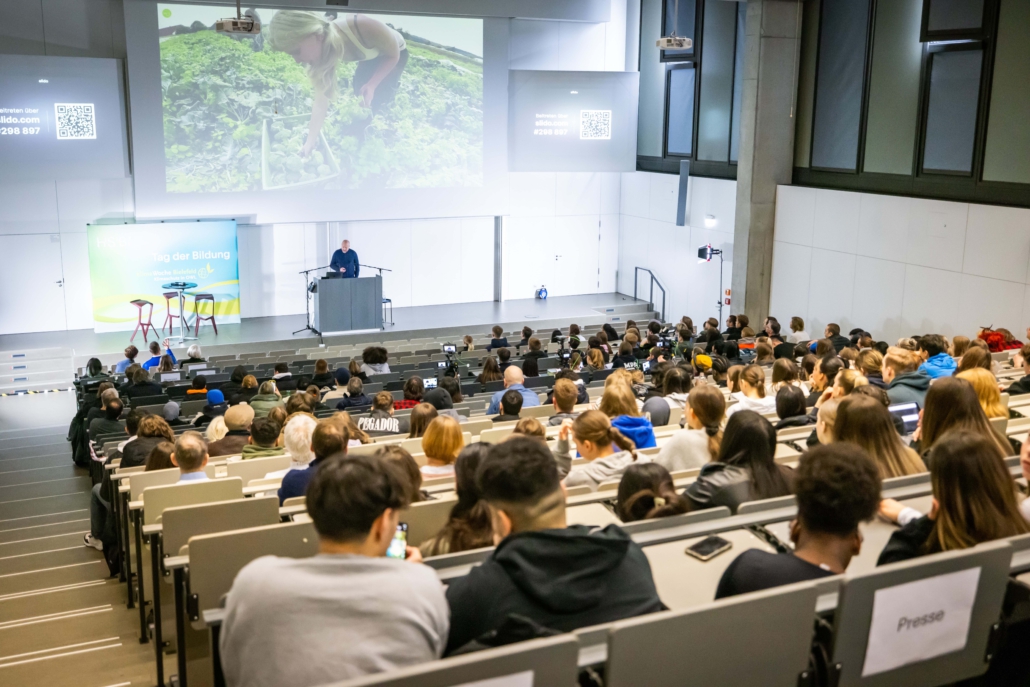
With the technical support of HSBI, the conference will once again be live streamed and accessible via an interactive digital platform. Simultaneous translation (German–English and English–German) will also be provided. This allows participation both on site in Bielefeld and online for schools across Germany and other European countries.

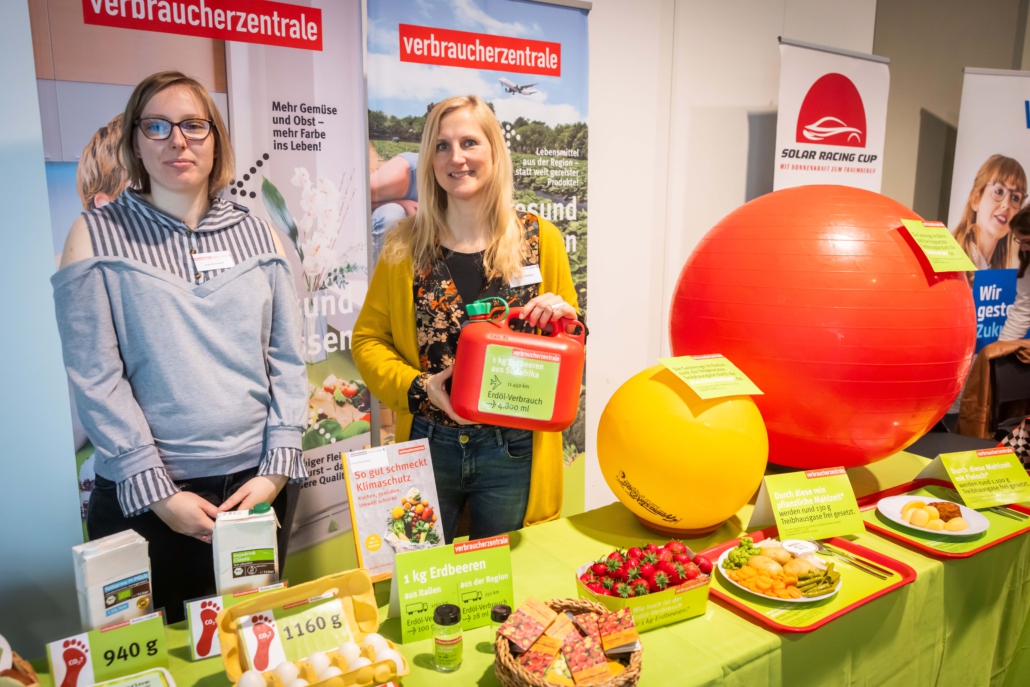
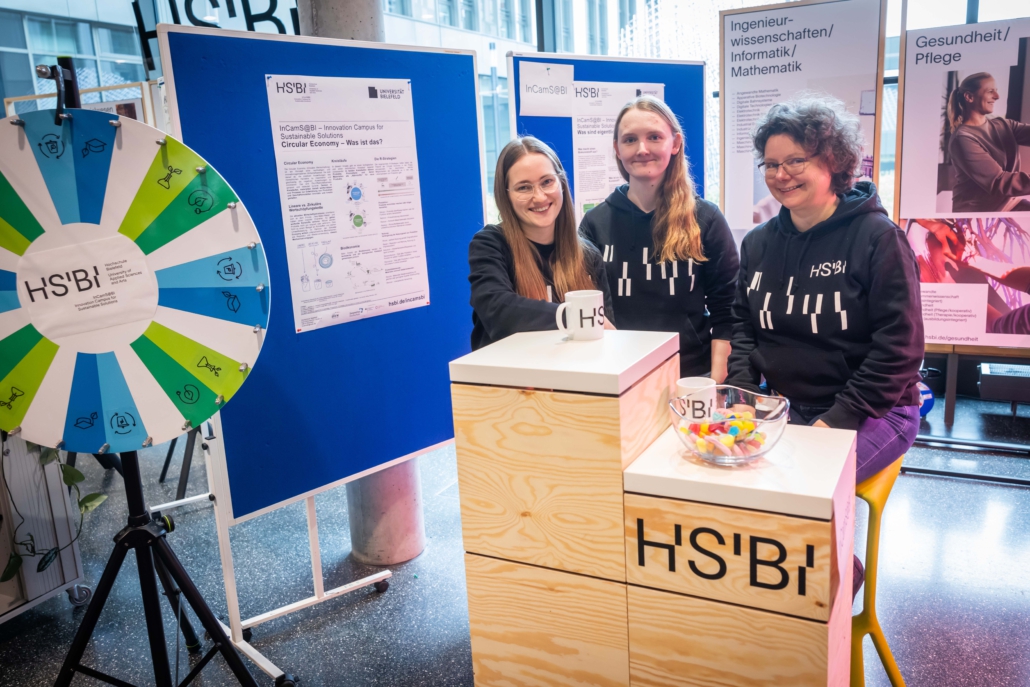
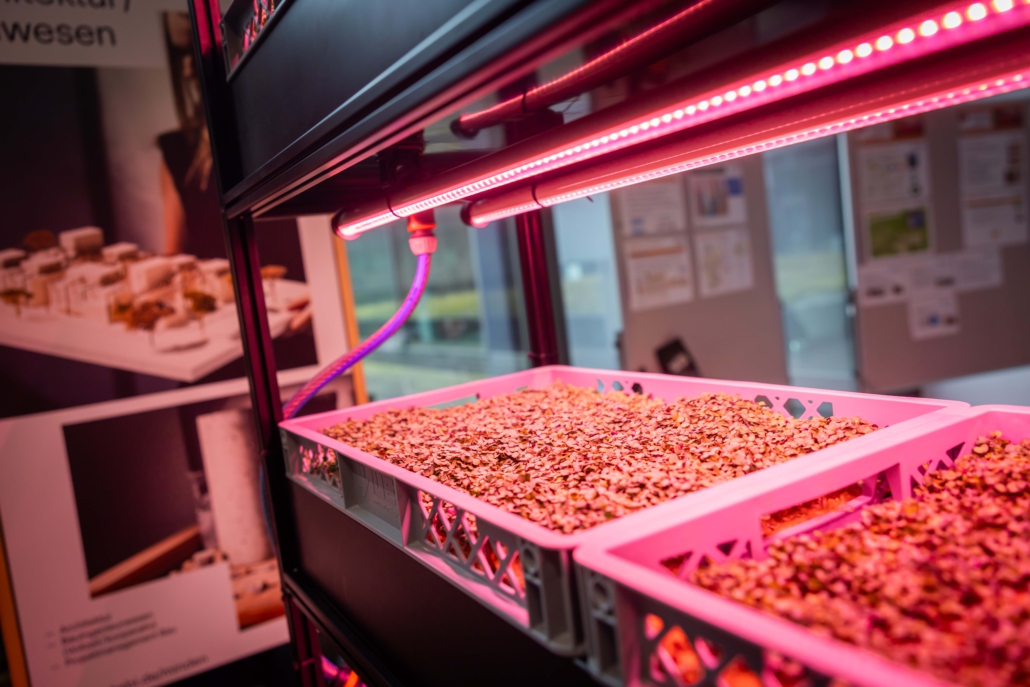
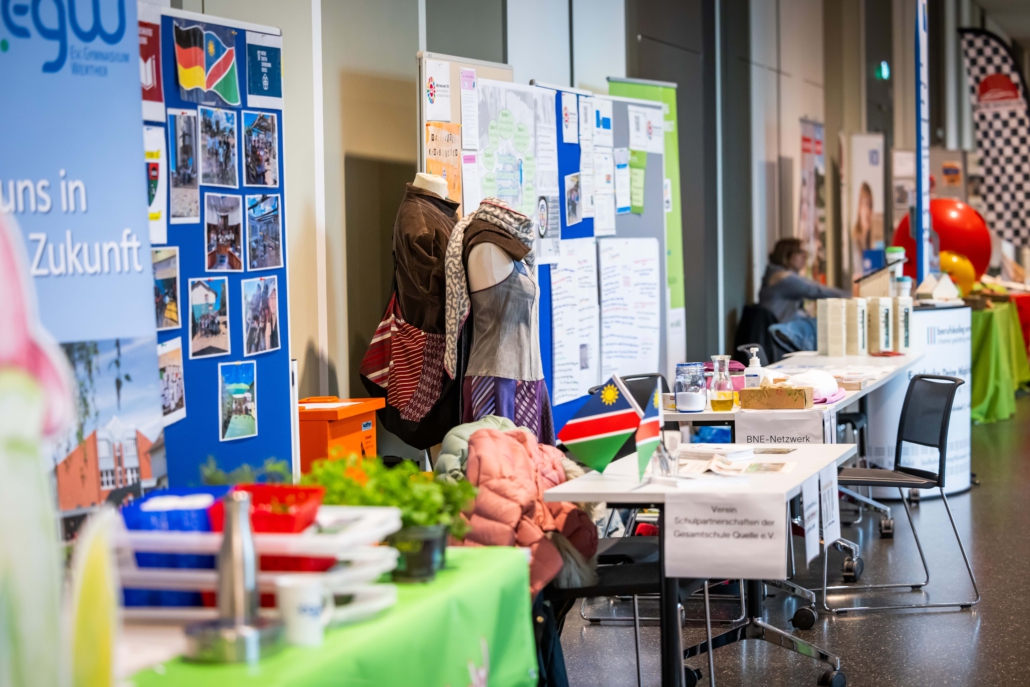
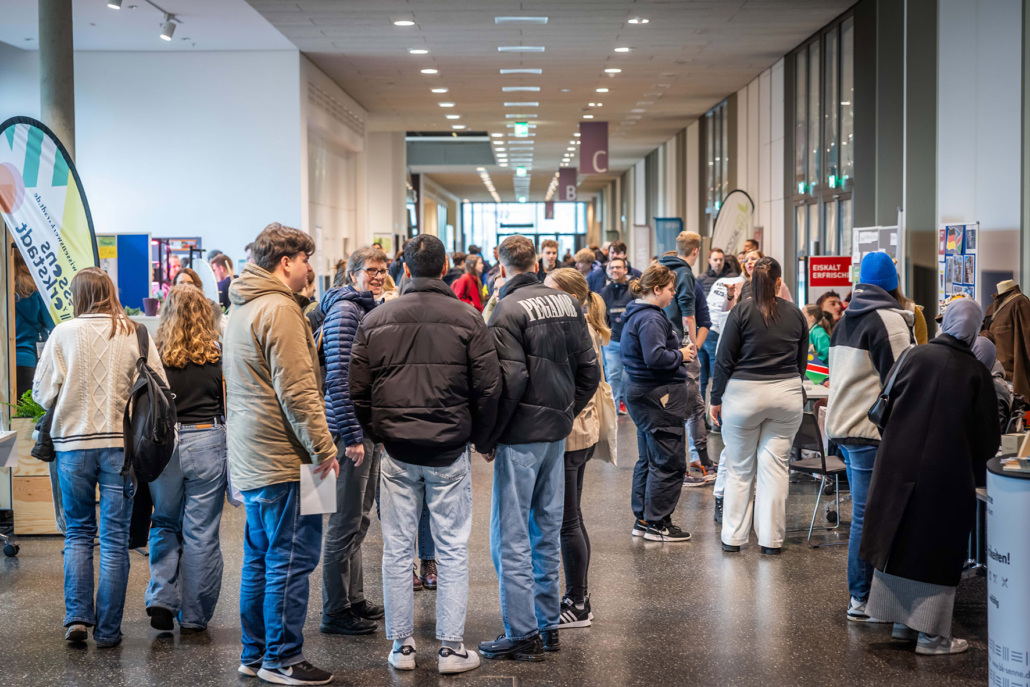
Interactive workshops will actively involve students’ ideas and questions, demonstrating how AI can be used meaningfully in school life, climate protection and social projects. At the “Marketplace of Opportunities”, schools, initiatives, universities and companies will present their projects related to AI, education and sustainability.

In 2026, the Education Day and the International Student Climate Conference will take place for the sixth time in cooperation with Hochschule Bielefeld (HSBI). Together, we are creating a space where young people can actively explore and shape the future of AI, education and climate protection.


 

Education Day 2026 is supported by the European Climate Pact.
AGENDA | TIMETABLE

6th International Student Climate Conference

  • 08:00 Uhr

    Set-up of the Marketplace of Opportunities

  • 09:00 Uhr

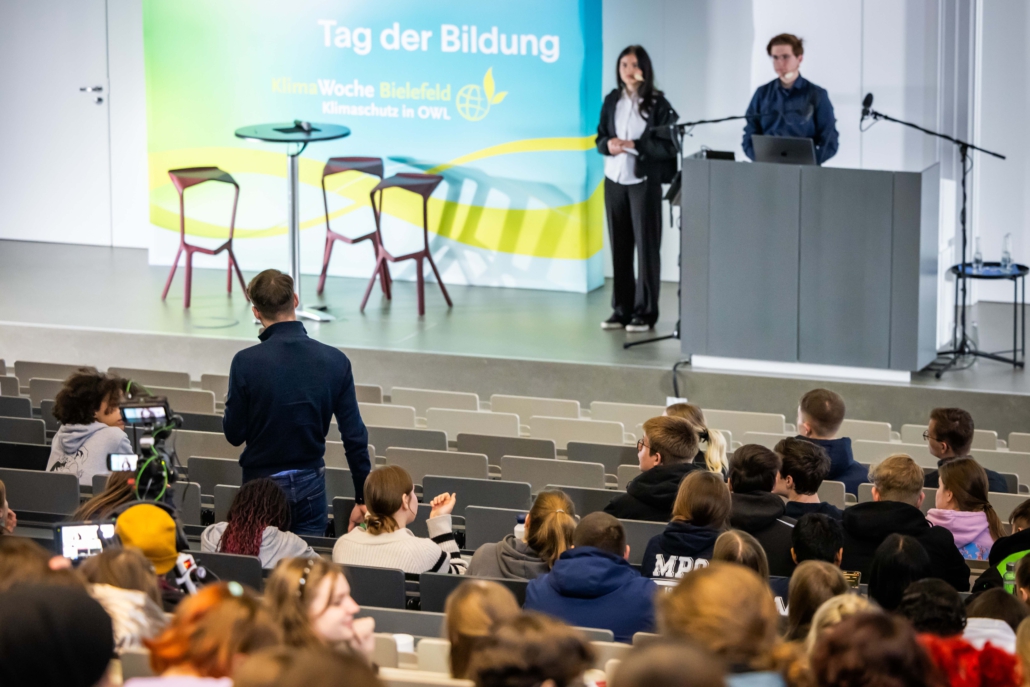
    Welcome | Audimax

    Moderators
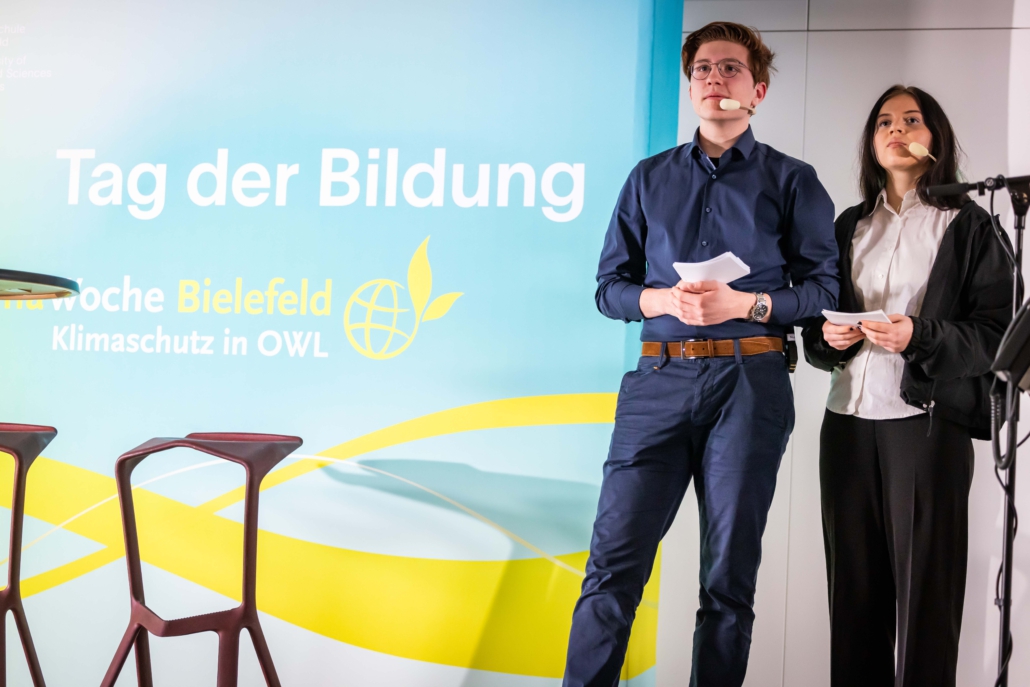
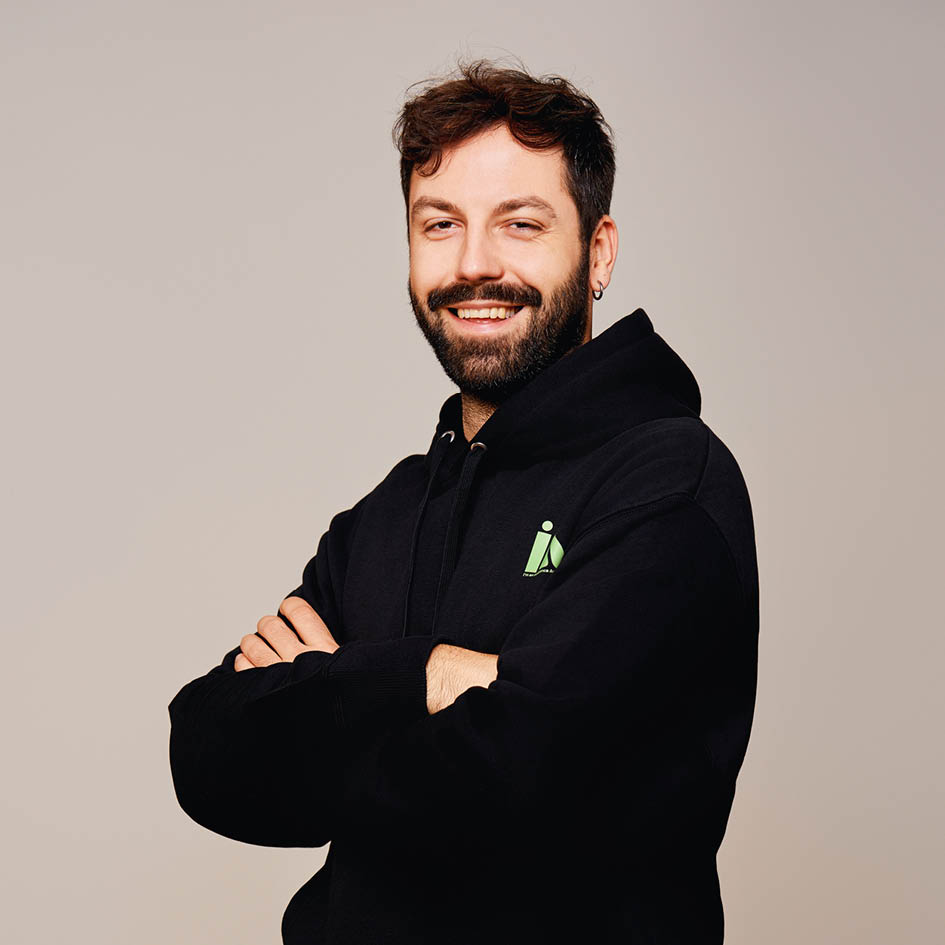
    Emily Drummen and Jonas Elsner

    President of Hochschule Bielefeld – University of Applied Sciences and Arts (HSBI)
    Prof. Dr. rer. medic. Ingeborg Schramm-Wölk

    Director of the School Department, District Government of Detmold
    Michael Uhlich

    City Councillor of the City of Bielefeld for Schools, Citizens, Culture and Sports
    Birgit Beckermann

    Chairman of the Board, KlimaWoche Bielefeld e.V.
    Jens Ohlemeyer

  • 09:15 Uhr

    Keynote Speech – Shailendra Tomar

    European Climate Pact Ambassador

    „AI x Energey x Climate: What Happens Next Is On Us“
    Keynote speech in english language

  • 09:30 Uhr

    Keynote Speech Dr. Caroline Pons

    Project Team Member, Bi.green Project (REGE mbH)

    “Your chatbot drinks more than you do – Risks and opportunities of AI for the climate”

  • 09:45 Uhr

    Project Presentation – Kaan Altun

    Project Lead, HSBI – University of Applied Sciences and Arts

    “A robot driving through Bielefeld – and what it has to do with your future”

  • 10:00 Uhr

    Keynote Speech Daniel Lukats

    Researcher and PhD Candidate at the DFKI (German Research Center for Artificial Intelligence)

    “An engineer, a biologist and a computer scientist board a ship – what AI needs for ocean monitoring”

  • 10:15 Uhr

    Tools Tools

    Comic Presentation speech Dr. Julia Schneider | Timo Heimbach

    Comic essayist, business and AI expert

    “AI: Climate saviour or final boss? What non-binary sea cucumbers, pigeons and comics have to say about it.”

  • 10:30 Uhr

    Break | Marketplace of Opportunities

    Magistrale der HSBI

  • 11:00 Uhr

    Workshop Session

    Seminar Rooms | Audimax

  • 12:30 Uhr

    Lunch Break | Marketplace of Opportunities

    Magistrale

  • 13:00 Uhr

    Presentation of Workshop Results

    Room: AudiMax

  • anschließend

    Summary and Closing Remarks

    Room: AudiMax

  • 14:00 Uhr

    End of the 6th International Student Climate Conference

Moderation | Speakers | Contact KLIMAKONFERENZ

Emily Drummen
Moderation

Jonas Elsner
Moderation

Shailendra Tomar
keynote speech
09:15 Uhr

Dr. Caroline Pons
keynote speech
09:30 Uhr

Kaan Altun
project presentation
09:45 Uhr

Daniel Lukats
keynote speech
10:00 Uhr

Dr. Julia Schneider
Comic-Speech
10:15 Uhr

Timo Heimbach
Comic-speech
10:15 Uhr

Contact

Jens Ohlemeyer
Mail

Sven Stock
Mail

WORKSHOPS

6th International Student Climate Conference

Workshop 1
Artificial Intelligence – Climate Saviour or Environmental Threat?

Room: F319
Maximum number of participants: 25
Recommended for: from Grade 10 onwards
Speaker: Ruth Hamper

Artificial Intelligence (AI) is not purely digital – it is physically embedded in the real world. This has consequences for nature and the environment. AI can make environmental protection more effective and efficient. At the same time, we must ensure through appropriate measures that the use of AI does not unintentionally undermine sustainability goals.

In this workshop, participants will develop ideas for a thoughtful and responsible use of AI.

Offered by Abfallberatung im Umweltbetrieb.

Workshop 2
Training in the AI Gym

Room: F316
Maximum number of participants: 25
Recommended for: Grades 10–13
Speakers: Zoe Brandt, Maha Elhusieny

In this AI Gym, you will get fit for the future and learn how to work with artificial intelligence. Where do we encounter AI in everyday life? And does AI really know everything? Through playful and experimental activities, we will explore these questions together.

At different stations in our unique “fitness studio,” you will train your skills. Challenge yourself individually or form teams and compete against each other.

Skills include:
Data training, AI – Fake vs. Real, advanced prompting, basic AI concepts, AI & ethics, AI & creativity, AI in everyday life, risks and opportunities.

Offered by: GMK-M-Team, Gesellschaft für Medienpädagogik und Kommunikationskultur (GMK) e.V.

Workshop 3
Modular Bicycle Parking Structures – Structural Design & Pre-Sizing
Workshop held in English

Room: B238
Maximum number of participants: 15
Recommended for: from Grade 10 onwards
Speakers: International Students BIP

Technical Focus
• Structural concepts (steel, timber, hybrid systems)
• Load assumptions (dead load, wind, snow and user loads)
• Modular design principles and expandability
• Foundations vs. relocatable structures

Expected Output
• Conceptual structural sketches of a modular system
• Preliminary structural sizing of main components
• Material and construction concept
• Rough cost estimate per bicycle parking space

offered by Erasmus+ Blended Intensive Programme

Workshop 4
Smart Bicycle Parking – Sensors and Digital Guidance Systems
Workshop held in English

Room: B242
Maximum number of participants: 15
Recommended for: from Grade 10 onwards
Speakers: International Students BIP

Technical Focus
• Occupancy detection technologies (ultrasonic, camera, weight, RFID)
• Energy supply concepts (battery, photovoltaic systems, low-power networks)
• Data flow and system architecture
• User interfaces (apps, displays, campus integration)

Expected Output
• System architecture diagram
• Sensor selection with technical justification
• Concept for a digital bicycle parking guidance system
• Considerations regarding data privacy and system operation

offered by Erasmus+ Blended Intensive Programme

Workshop 5
PV-Based Charging Infrastructure for E-Bikes and Pedelecs
Workshop held in English

Room: B244
Maximum number of participants: 15
Recommended for: from Grade 10 onwards
Speakers: International Students BIP

Technical Focus
• User behaviour and charging demand profiles
• PV generation potential and energy storage concepts
• Electrical safety and relevant standards
• Integration into bicycle parking infrastructure

Expected Output
• Load profile and power demand estimation
• Dimensioning of the PV system and battery storage
• Electrical block diagram of the charging station
• Assessment of grid-connected vs. (partly) autonomous operation

offered by Erasmus+ Blended Intensive Programme

Workshop 6
Bicycle Service Infrastructure – Self-Service and Repair Concepts
Workshop held in English

Room: B239
Maximum number of participants: 15
Recommended for: from Grade 10 onwards
Speakers: International Students BIP

Technical Focus
• Modular self-service repair stations (tools, air pumps, spare parts)
• Location planning and expected usage intensity
• Integration of external repair and maintenance services
• Operation, maintenance and vandalism prevention

Expected Output
• Modular service station concept
• Recommended locations on campus
• Comparison of self-service vs. external service models
• Rough cost–benefit assessment

offered by Erasmus+ Blended Intensive Programme

Workshop 7
Campus EV Charging Infrastructure – Energy, Space and System Impacts
Workshop held in English

Room: B240
Maximum number of participants: 15
Recommended for: from Grade 10 onwards
Speakers: International Students BIP

Technical Focus
• Charging power levels and user profiles
• Grid connection and load management strategies
• Interaction with bicycle infrastructure and PV systems
• Spatial requirements and energy prioritisation

Expected Output
• Scenario comparison (bike-focused vs. car-focused strategies)
• Estimation of power and space requirements
• Strategic recommendations for campus mobility planning
• Decision-support arguments for campus stakeholders

offered by Erasmus+ Blended Intensive Programme

Workshop 8
Design Thinking Workshop – Careers in Climate Protection and How AI Can Support Them

Room: C200
Maximum number of participants: 20
Recommended for: from Grade 10 onwards
Speakers: Dr. Caroline Pons, Dr. Angelika Maier

In this workshop, you will explore what lies behind “artificial” intelligence and what climate protection means in practice. You will get to know different professions related to sustainability and work together to identify current challenges and areas where action is needed.

Participants will develop their own ideas on how AI could help advance climate protection in concrete ways and which professional fields play an important role in shaping a sustainable future.

offered by Energie Impuls OWL e.V. & Rege GmbH

Workshop 9
AI in Everyday School Life – Group 1

Room: B300
Maximum number of participants: 20
Recommended for: from Grade 9 onwards
Speaker: tba

This workshop provides an introduction to the possibilities of artificial intelligence in everyday school life. Participants will explore practical examples, take part in short hands-on exercises and reflect on how AI can be used responsibly in learning environments.

Participants are asked to bring a digital device.
A tablet is recommended; alternatively, a smartphone can be used.

offered by DigitalErleben GmbH

Workshop 10
AI in Everyday School Life – Group 2

Room: B400
Maximum number of participants: 20
Recommended for: from Grade 9 onwards
Speaker: tba

This workshop offers an introduction to the possibilities of artificial intelligence in everyday school life. Participants will explore practical examples, take part in short hands-on exercises and reflect on how AI can be used responsibly in learning environments.

Participants are asked to bring a digital device.
A tablet is recommended; alternatively, a smartphone can be used.

offered by DigitalErleben GmbH

Workshop 11
More Than Gaming – Virtual Reality (VR) as a Driver for Education for Sustainable Development

Room: F332
Maximum number of participants: 12
Recommended for: Grade 9
Speakers: Students from Grade 12, Vocational High School for Health

This workshop demonstrates how virtual reality (VR) can create new ways of experiencing environmental and climate-related topics. After a short introduction, participants will explore nature experiences, global perspectives and emotional approaches to the climate crisis at four VR stations.

A joint reflection and a before-and-after comparison will help participants understand how VR experiences can influence and potentially change perspectives.

offered by Berufskolleg Halle (Westf.)

Workshop 12
How Does AI Learn? From Machines to Artificial Intelligence

Room: experiMINT Student Laboratory – F023
Maximum number of participants: 16
Recommended for: from Grade 9 onwards
Speakers: René Rasche, Micha Schippling

Using the visual programming language Scratch, participants will explore how artificial intelligence can be integrated into computer programs.

No prior programming experience is required.

offered by experiMINT Schüler*innenlabor der HSBI Bielefeld

Workshop 13
Stop Mobbing – Crime Scene: Your Phone

Room: F014
Maximum number of participants: 40
Recommended for: Grades 9–11
Speakers: Trainee Professional Drivers

This workshop addresses the topic of cyberbullying and its impact on young people. Through an interactive introduction, participants will explore what cyberbullying is, the potential consequences for those affected, and the legal implications of online harassment.

The session also highlights common apps where cyberbullying can occur and discusses strategies for seeking help and preventing bullying. The workshop concludes with an interactive Kahoot quiz to reinforce key insights.

offered by CSBME / Auszubildende Berufskraftfahrer

Workshop 14
Microcontroller-Based Environmental Data Monitoring

Room: A424 (Senate Hall)
Maximum number of participants: 16
Recommended for: from Grade 10 onwards
Speaker: Manuel Boada

  1. Using artificial intelligence in the development of a simple environmental monitoring system.
  2. Insights into the current development stage of a planned tree monitoring system in Spain, based on microcontroller technology, modern sensors and LoRa wireless transmission.

Participants who would like to take part should bring their own laptop (Wi-Fi required).
The Arduino IDE 2.3.7 should be installed in advance:
https://www.arduino.cc/en/software/#ide

USB-A to micro-USB cables for connecting laptops to the microcontroller will be provided. Other types of cables will not be available.
Microcontrollers, sensors and cables will be provided.

offered by Carl-Severing-Berufskolleg für Metall- und Elektrotechnik

Workshop 15
AI Climate Box

Room: D011
Maximum number of participants: 20
Recommended for: from Grade 9 onwards
Speakers: Members of the Climate Action Group, Friedrich-von-Bodelschwingh-Gymnasium Bethel (Bielefeld)

This workshop provides basic knowledge and a hands-on introduction to the future-oriented topics of Artificial Intelligence (AI) and Nature-Based Climate Protection using the AI Climate Box. Participants will explore interactive learning stations featuring kits, games and educational materials, culminating in the development of a practical project idea.

offered by Klima-AG des Bielefelder Friedrich-vonBodelschwingh-Gymnasiums Bethel

Workshop 16
Using AI to Improve the Quality and Efficiency of Education for Sustainable Development (ESD) Projects

Room: D012
Maximum number of participants: 20
Recommended for: from Grade 9 onwards
Speaker: Andreas Frerkes

This workshop introduces the use of various AI tools in the school context. Participants will explore different applications and examine their potential benefits and limitations.

The session also analyses how these tools can contribute to improving the quality and efficiency of Education for Sustainable Development (ESD) projects.

offered by Steinhagener Gymnasium

Workshop 17
AI: Climate Saviour or Final Boss? What Non-Binary Sea Cucumbers, Pigeons and Comics Have to Say

Room: D010
Maximum number of participants: 30
Recommended for: all participants
Speakers: Dr. Julia Schneider, Timo Heimbach

This workshop combines comic reading, practical examples and discussion. Starting from the comic essay “A Pigeon’s Tale – A Comic Essay on Artificial Intelligence and Sustainability (from a bird’s-eye view)”, participants explore how comics can help us think about more sustainable approaches to AI.

The workshop also presents practical AI applications in the field of climate protection and discusses an important question: Does AI support sustainability goals – or can it sometimes stand in their way?

In interactive group activities, students will develop their own criteria for what “sustainable AI” could look like.

offered by: Dr. Julia Schneider, Timo Heimbach

Workshop 18
How Much Water Does a Prompt Cost?

Room: Audimax
Maximum number of participants: 100
Recommended for: from Grade 9 onwards
Speakers: Max Alexander, Steffen Müller

Every AI request consumes resources. A single prompt may only require a few drops – but at scale, they can use lake-sized amounts of water and as much electricity as entire cities.

In this interactive session, participants will take a look behind the scenes of AI tools and discuss the environmental impact of digital technologies as well as the dilemmas we face in our everyday use of AI.

offered by KI MACHT SCHULE

Workshop 19
Der digitale Zwilling

Raum: B347
max. Teilnehmerzahl: 20
geeignet für: 9. -11. Klasse
Referent:in: n.n.

In diesem Workshop lernen Schülerinnen und Schüler den Digitalen Zwilling und seine Verwendung in Industrie und Wirtschaft kennen. Dabei ergründen sie ihren eigenen Digitalen Zwilling in den sozialen Netzwerken wie Instagram, Snapchat oder TikTok und dessen Bedeutung für die Werbewirtschaft.

Ein Angebot des Schülerlabor coolMINT Paderborn

MODERATION

6th International Student Climate Conference

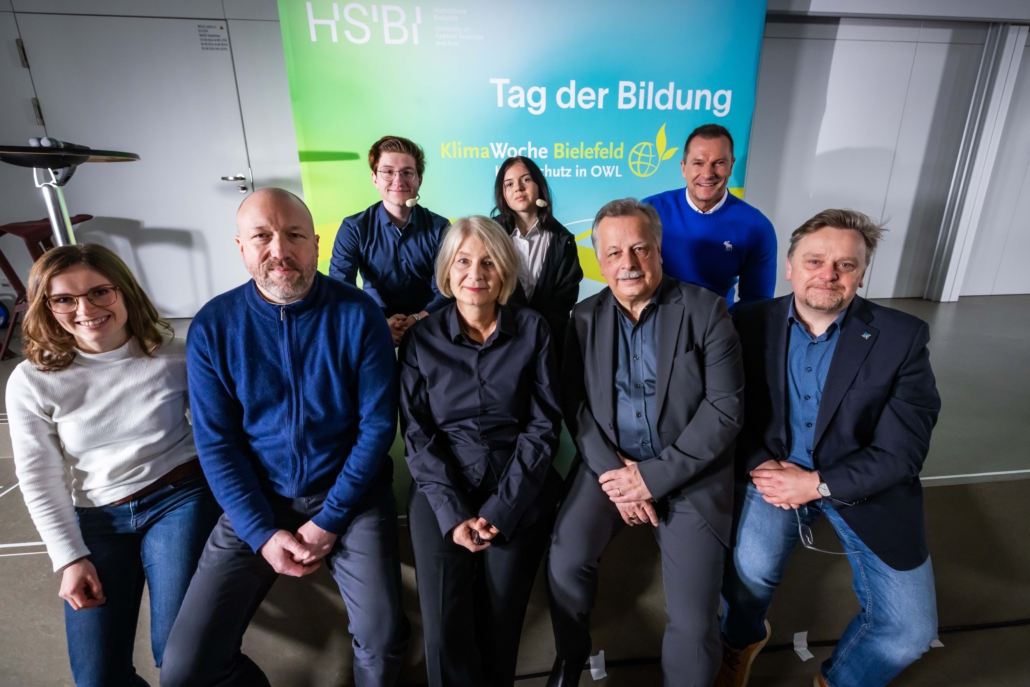
Moderation by Emily Drummen and Jonas Elsner

In 2026, the event will once again be moderated by members of the Climate Action Group of the Friedrich-von-Bodelschwingh Gymnasium (Bielefeld-Bethel). The Climate Action Group was the starting point for the founding of the KlimaWoche Bielefeld association in 2009, which, together with Hochschule Bielefeld – University of Applied Sciences and Arts (HSBI), is hosting the International Student Climate Conference for the sixth time.

Emily Drummen


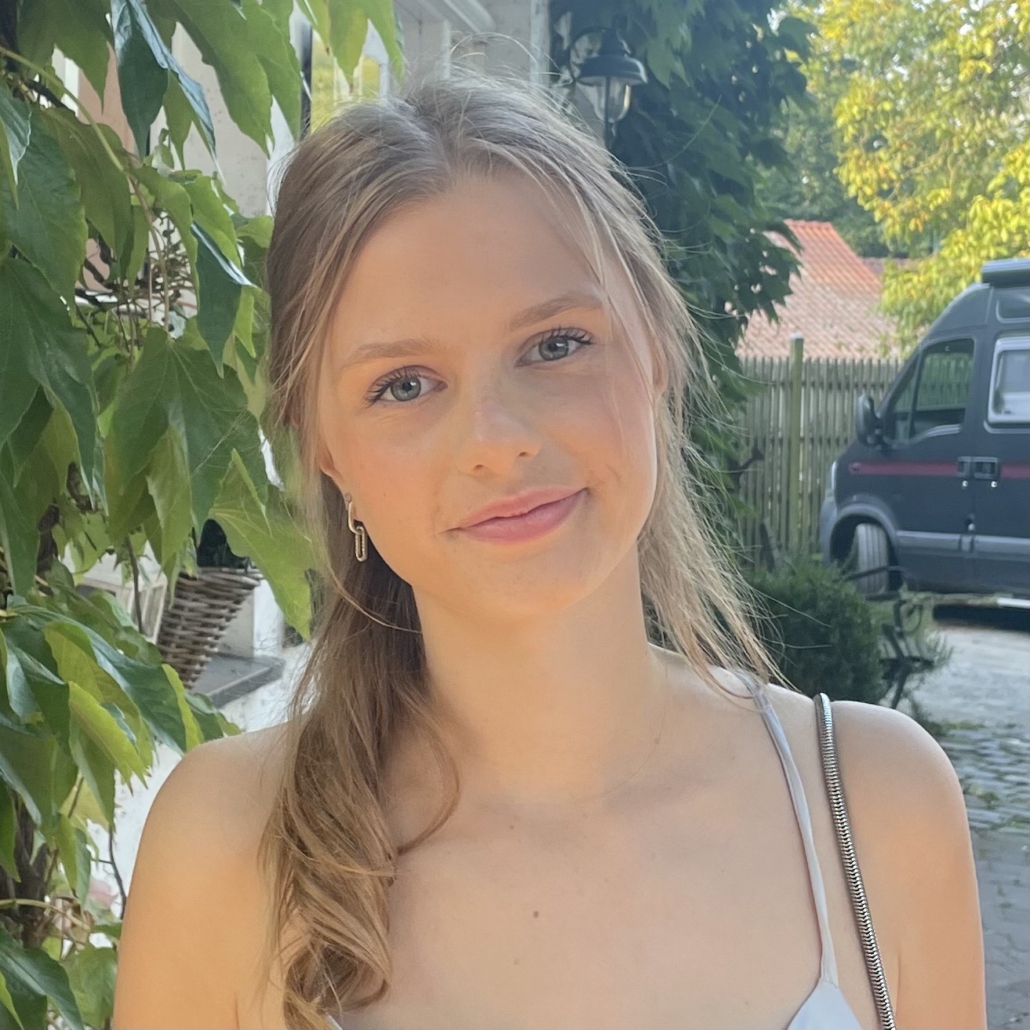
Hello, my name is Emily, I am 18 years old and a student at the Friedrich-von-Bodelschwingh Gymnasium.

Since transferring to this school, I have been a member of the Climate Action Group (Klima-AG). I took part in the most recent tree planting campaign, and I am actively involved in school initiatives such as climate workshops for students. I also try to live as climate-consciously as possible in my private life. For example, I follow a vegetarian diet at home and mainly get around using my beloved Dutch bicycle as my primary means of transport.

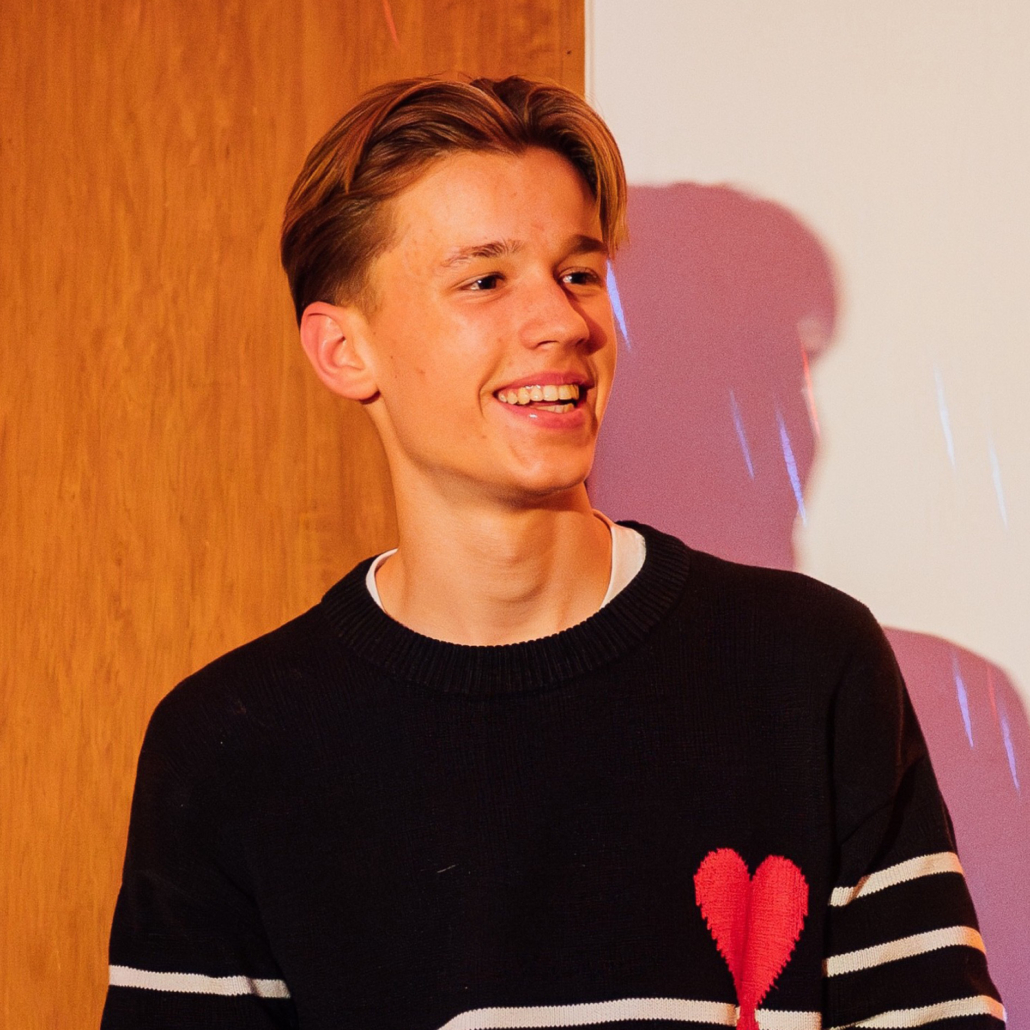
Hi, my name is Jonas, and I have been a member of the Climate Action Group (Klima-AG) for several years. Within the group, I contribute to various projects that focus on sustainability and, in some cases, artificial intelligence.

Over the past few years, I have also had the opportunity to co-moderate several school events related to Education for Sustainable Development (ESD). I engage extensively with the topic of AI in my advanced biology course, where I am currently writing my research paper on learning with and through artificial intelligence.

Overall, I am particularly interested in exploring how new technologies can be used in meaningful ways to support education and sustainable development.

Jonas Elsner


SPEAKERS| AUDIMAX

6th International Student Climate Conference

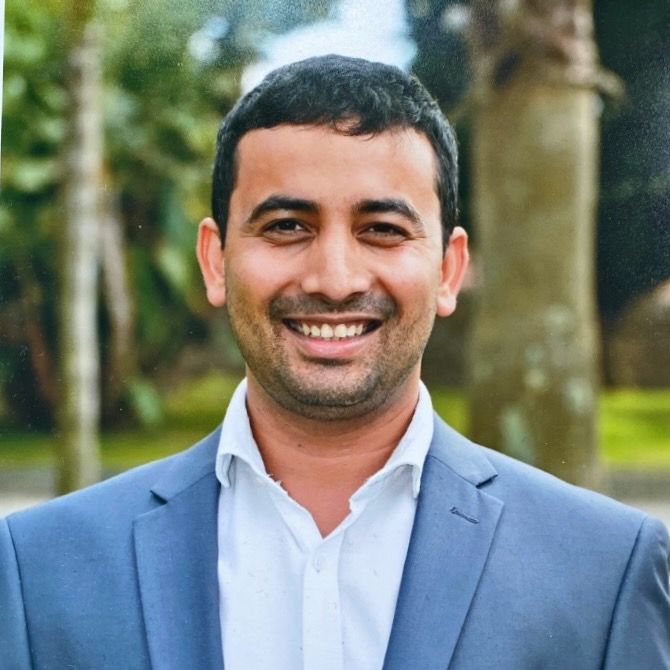
Shailendra Tomar


Shailendra Tomar is the Founder and CEO of Preflet GmbH, where he developed LEO, currently one of the most adaptable agentic AI systems for intelligent energy and resource management in buildings.

With over a decade of experience in data, energy and climate protection, he has implemented significant projects across Europe, Asia and Latin America.

He holds a Master’s degree in Statistics and Information Management and serves as a EU Climate Pact Ambassador for Germany.


Title of his presentation (in English):

„AI x Energey x Climate: What Happens Next Is On Us“

This talk explores how “AI Time-Travel” is accelerating scientific progress, why energy is at the heart of the climate crisis. It highlights Europe’s push for green technologies, shares the story behind agentic LEO and shows how the next generation can shape what comes next.

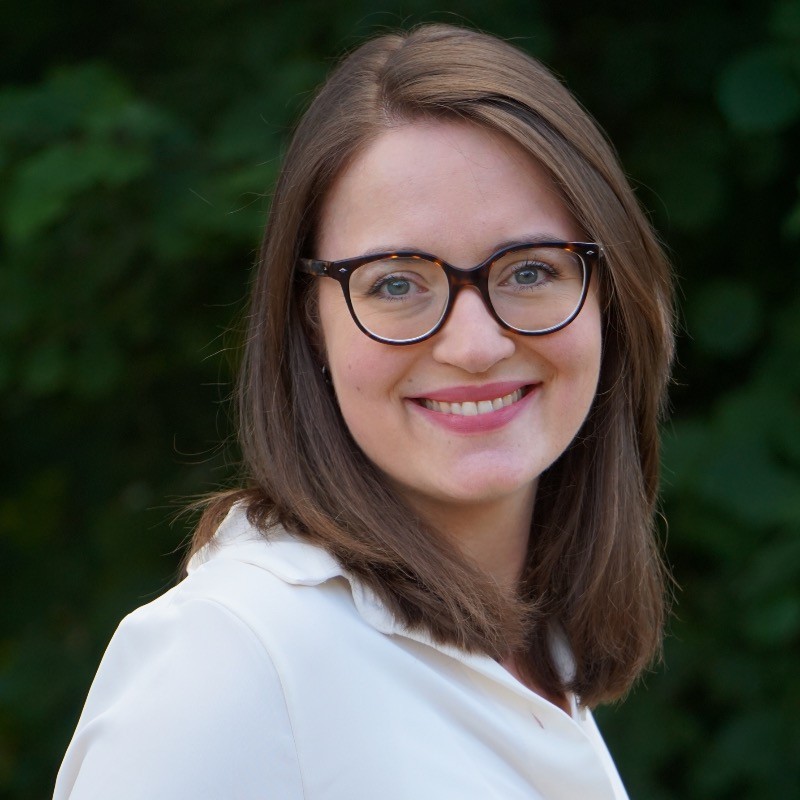
Dr Caroline Pons is a project coordinator for the Training Initiative for Climate Protection Careers (BI.green), a project of REGE – Regional Employment Development Company mbH. The initiative connects climate protection and career orientation, encouraging young people to choose meaningful, climate-related vocational training while also helping to secure skilled professionals for companies in Bielefeld.

She holds a PhD in Biology and conducted research on the effects of water stress on crop plants during her academic career. She later moved from the university sector into museum and environmental education, where she develops and delivers educational programmes for the Bielefeld region.

In her current role as a contact person for BI.green, she presents the initiative’s topics in school workshops and public formats, always with the aim of inspiring young people to explore sustainable and climate-related career paths.
Further information  www.bi-green.de.

Dr. Caroline Pons


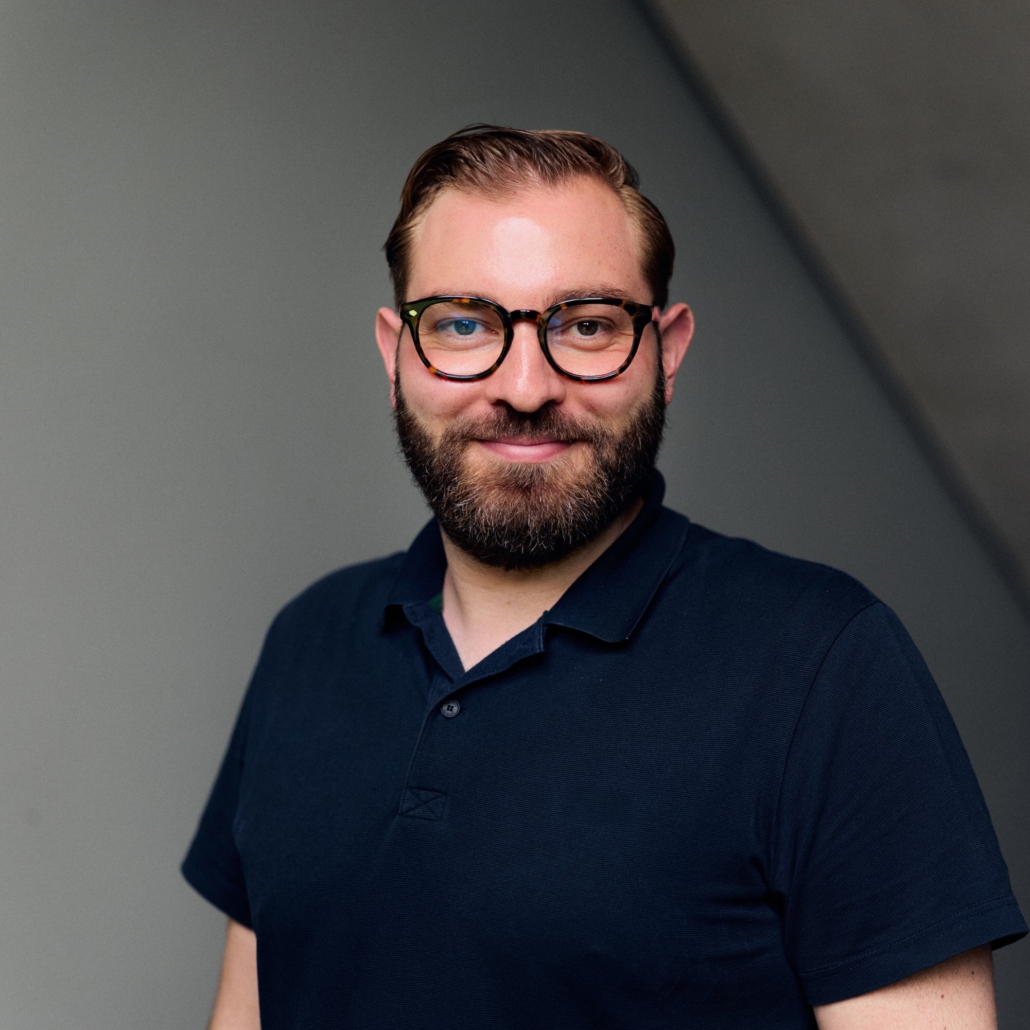
Kaan Altun


Kaan Altun is a research associate at Hochschule Bielefeld – University of Applied Sciences and Arts (HSBI) and project lead of the innovation and sustainability project “AQ-Shuttle.” As a law graduate (LL.B.), he combines perspectives from law, technology and societal issues related to digitalisation and mobility. In addition to his research work, he is actively involved in international academic exchange and the organisation of scientific networks. His focus is on making innovation understandable and building bridges between theory and practice.


Title of the presentation

“A Robot Driving Through Bielefeld – and What It Has to Do with Your Future”

In his presentation, Kaan Altun introduces the innovation and sustainability project “AQ-Shuttle,” an autonomous delivery robot that has been operating in Bielefeld. He explains how such technologies work, what opportunities they offer for climate protection and urban development, and why young people play an important role in shaping the mobility of the future.

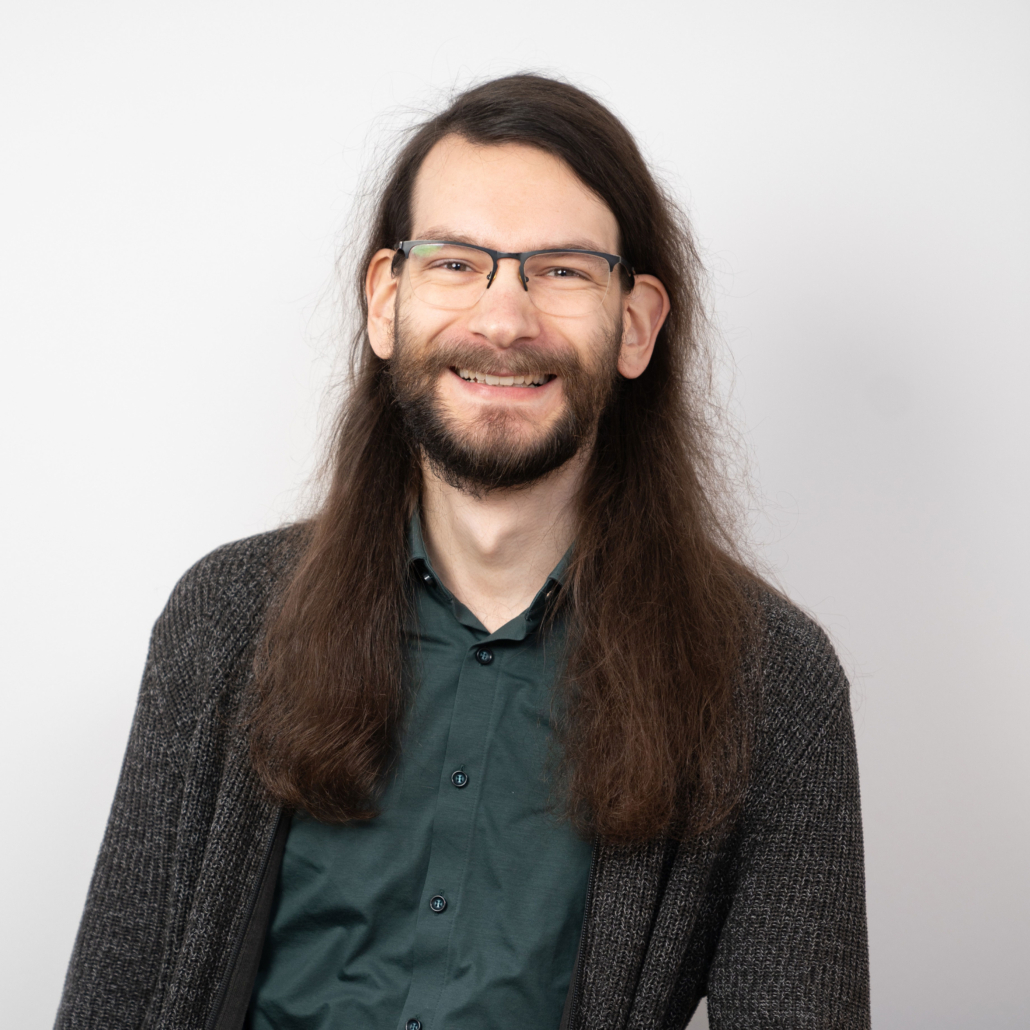
Daniel Lukats is a researcher and PhD candidate at the German Research Center for Artificial Intelligence (DFKI) in the Marine Perception research department in Oldenburg. His research focuses on AI-based methods for detecting environmental changes in oceans and lakes, such as algal blooms and marine heatwaves.

For more than 35 years, DFKI has been developing artificial intelligence solutions for major societal challenges, ranging from climate protection to health research.


Title of the presentation

“An Engineer, a Biologist and a Computer Scientist Board a Ship – What AI Needs for Ocean Monitoring”

The oceans cover 71% of the Earth’s surface and are particularly affected by human-induced climate change. As water temperatures rise, the likelihood of extreme events such as toxic algal blooms also increases.

But what exactly is required for artificial intelligence to detect these algal blooms? In his talk, Daniel Lukats explains the data, technologies and interdisciplinary collaboration needed to enable AI systems to monitor and protect our oceans.

Daniel Lukats


Dr. Julia Schneider


Timo Heimbach


Dr Julia Schneider (also known as Doc J Snyder) is a Berlin-based comic artist, business expert and AI specialist. In her artistic work and comic essays, she combines art and science to make complex topics such as artificial intelligence, sustainability and economic systems more accessible and to encourage people to form their own informed opinions.


Title of the presentation

“AI: Climate Saviour or Final Boss? What Non-Binary Sea Cucumbers, Pigeons and Comics Have to Say”

How can we develop artificial intelligence in a way that takes climate protection and sustainability into account – from its energy consumption to its potential to create more efficient systems? Using the comic essay “Sea Cucumber Looking for a Seagrass Meadow,” the presentation illustrates what more sustainable AI could look like. At the same time, it demonstrates why comics are a powerful medium for making complex technological issues understandable and open for discussion.

Timo Heimbach is Marketing and Communications Manager at Birds on Mars, a Berlin-based consultancy focused on the responsible use of artificial intelligence. Birds on Mars advocates for AI systems that not only work technically but also create meaningful value for society. Timo studied Communication at the Berlin University of the Arts and has previously worked in advertising agencies and cultural marketing.

Education Day

is supported by the

European Climate Pact.

 

BEGRÜSSUNG

Präsidentin der Hochschule Bielefeld 
Prof. Dr. rer. medic.
Ingeborg Schramm-Wölk


Oberbürgermeisterin der Stadt Bielefeld
Dr. Christiana Bauer


Vorstandsvorsitzender der
KlimaWoche Bielefeld e.V. 
Jens Ohlemeyer


Die 6. Internationale Schüler:innen Klimakonferenz im Rahmen des Tags der Bildung steht unter der Schirmherrschaft der Oberbürgermeisterin der Stadt Bielefeld.

Bürgermeister xxxx ist vor Ort und begrüßt um 09:00 Uhr im Audimax gemeinsam mit der Präsidentin der Hochschule Bielefeld Prof. Dr. rer. medic. Ingeborg Schramm-Wölk und Jens Ohlemeyer die Teilnehmenden.

Statement von Bürgermeister xxxx

xxxx


REFERIERENDE

KEYNOTE xxxx

WORKSHOP INFOS

Die Teilnahme an den Workshops kann über die Plattform Eventbrite gebucht werden. Für jeden Workshop gibt es unterschiedliche begrenzte Kapazitäten. Diese sind in der jeweiligen Info ersichtlich. Den Link zur Workshop-Anmeldung haben wir an alle Teilnehmenden per E-Mail versendet.

© Copyright: KlimaWoche-Bielefeld e.V.